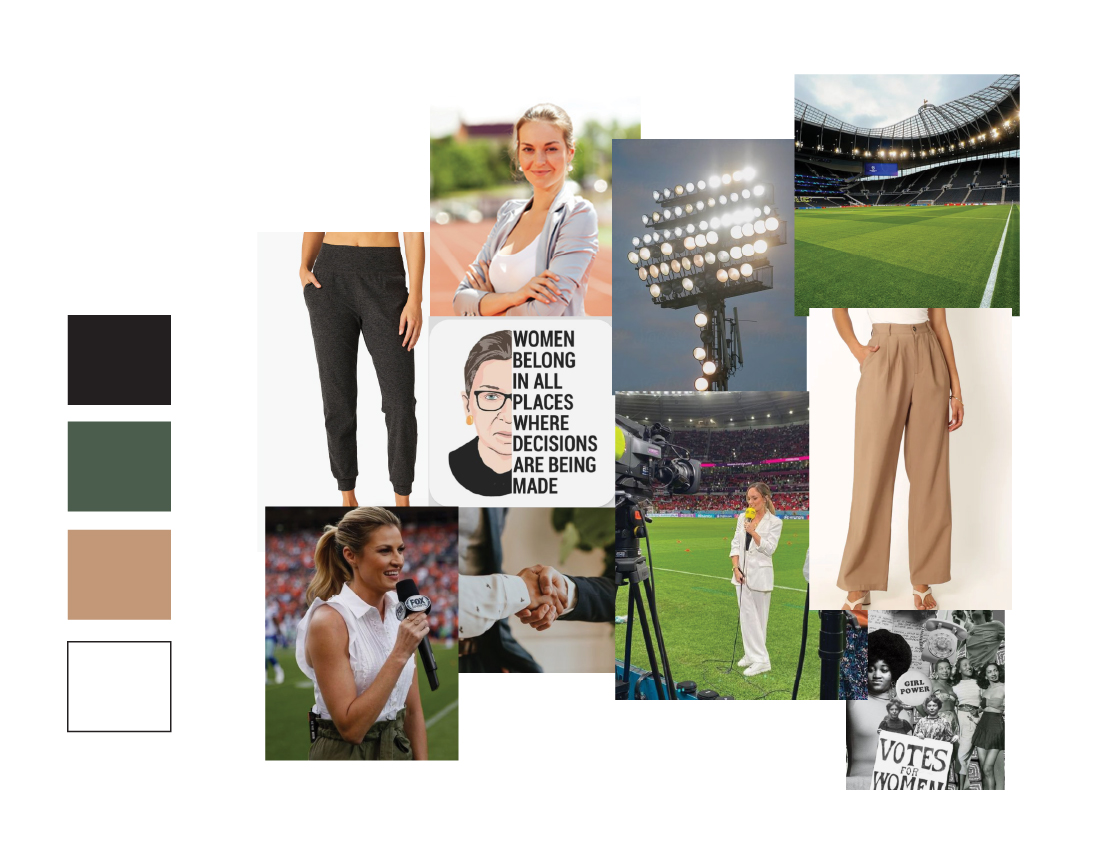
A mood board isn't a Pinterest dump. It's the first time a brand has to commit. Color direction, fabric character, silhouette references, competitive context — all on one surface, side by side, where the contradictions show up before they get expensive.
The point of doing this work first is simple: every later decision gets cheaper. Fabric sourcing, factory matching, sample reviews — they all run faster when there's a clear visual answer to "is this on-brand?" Without a mood board, that question gets re-litigated every round.
What it includes
A finished board has four things on it: a visual mood (texture, mood photography, references), a color palette pulled to real Pantone or fabric chips, fabric character notes (drape, weight, hand-feel), and three to five competitors with a one-line read on each.
Why it matters
A founder who can't describe their product in one image will struggle to describe it to a factory, a buyer, or a customer. The mood board is the test. If we can't make it clear here, we don't move on.